Friday, August 20, 2010

THE IMPACT OF ETHNOMUSICOLOGY: ANNUAL ONE-DAY CONFERENCE

CALL FOR PAPERS
BRITISH FORUM FOR ETHNOMUSICOLOGY in association with THE INSTITUTE OF MUSICAL RESEARCH

4TH DECEMBER 2010

The winter one-day conference of the British Forum for Ethnomusicology will be held at The Institute of Musical Research, part of the School of Advanced Study at the University of London.  The theme for the day will be 'The Impact of Ethnomusicology'.

'Impact' is both a buzz-word and a bête noire in British higher education at present. Scholars in publicly-funded institutions are increasingly being asked to assess the influence of their research outside of the academy, and this applies just as much to ethnomusicologists employed in such institutions as to others.

Nevertheless, perhaps more than any other part of the music studies field, the public-facing nature of ethnomusicology, and its emphasis on participation and social experience, on understanding musical 'being-in-the-world' as Jeff Todd Titon puts it, has ensured that ethnomusicologists have usually been very mindful of their relationship to those around them, and of the consequences their work might have. Rather than simply responding to political imperatives, therefore, we instead want to use this conference to reflect on the consequences of our work, for good and for ill, in the wider world; and, building on a long disciplinary tradition of self scrutiny and re-invention, to consider what this tells us about ethnomusicology, and how it might help us position and develop the discipline in the rapidly changing times in which we find ourselves.

The following broadly-conceived questions that we might address are offered merely as starting points:

.     In what ways, and over what kinds of timescales, have ethnomusicologists
impacted on the people with whom they work, and the environments in which that work takes place? How might the impact of such work be evaluated or valorised beyond 'conventional' ethnomusicological outputs?
.     Is ethnomusicological impact usually positive-or at least benign-or are
there clear instances of negative consequences?  How might one construe the negative impact of ethnomusicology, and should such work necessarily be avoided?
.     How does the notion of impact overlap with disciplinary considerations
of applied ethnomusicology?
.     When does ethnomusicology become so applied - that is, in its
engagements with social issues or its advocacy on behalf of particular culture bearers - that it calls into question the boundaries of conventional scholarship and supposed scholarly distance?
.     To what extent should scholarly organisations such as BFE proactively
engage with organisations such as WOMAD or South Asian Arts, and what is the relationship between such engagements and other forms of research?
.     To what extent does the impact of ethnomusicology define the discipline,
or to what extent should it be allowed to do so?
.     Notwithstanding that current discourses around impact tend to focus on
social and cultural consequences outside of the academy, how has the development of ethnomusicology impacted upon the academy as a whole, or any of its constituent parts, particularly in areas far removed from cognate disciplines such as music or anthropology?

Potential contributors are invited to submit abstracts of up to 300 words to the administrator of the IMR, Valerie James, preferably via email (Valerie.James@sas.ac.uk), or by post to:

Valerie James
Administrator
Institute of Musical Research
School of Advanced Study
University of London
Senate House
Malet Street
London WC1E 7HU

Queries relating to the theme of day or the BFE may be addressed to the conference convenor, Dr Stephen Cottrell (s.cottrell@gold.ac.uk)

The deadline for submissions is 1st September 2010, and contributors will be advised by mid September.

Further information on the conference will be uploaded on the BFE website as it becomes available:


Friday, July 30, 2010

Upcoming digital collection!

Introducing our newest digital collection: L'art Decoratif de Leon Bakst.
"Léon Bakst (1866-1924) was a Russian portraitist and designer who spent much of his career in Paris. This book reflects his extraordinary collaborative work with Sergei Diaghilev and the Ballets Russes as well as the dancers Ida Rubinstein and Vaslav Nijinsky. The costumes and set designs in the book demonstrate his modern yet exotic aesthetic as well as a consistently brilliant and detailed use of color. " (Description by Patricia Sasser of University of South Carolina University Libraries' Digital Collections.)


This digital collection includes the entire publication, which consists of an extensive introduction, ballet synopses, and beautifully illustrated plates. Included here is the famous dancer Vaslav Najinsky in Afternoon of a Faun (Prelude a l'apres-midi d'un faune). Interestingly, an internet search returned what appears to be Najinsky in the actual costume based off the plate we've included here.

For a truly multimedia experience, USC patrons can listen to the Prelude to Afternoon of a Faun (Prelude a l'apres-midi d'un faune)on Naxos Music Library here.

We'll update you once again when this collection is published online, so stay tuned!

Tuesday, July 20, 2010

Aiken Youth Orchestras Fall Auditions

Aiken Youth Orchestras Fall Auditions
Saturday August 28th, 2010 and Tuesday August 31st, 2010

The Aiken Youth Orchestras will hold auditions for the fall semester, August 28th from 2 to 4 p.m. and August 31st from 6 to 8 p.m., at the Aiken Center for the Arts. Auditions are open to all students grades 3 and up with at least one year experience on their instruments. There is no audition fee, but scheduling a time is recommended.
Aiken Center for the Arts
Aiken, South Carolina
For information (803) 641-9094
E-mail to: Cathy Rumble

Monday, July 19, 2010

"Musical Thinking, Thinking Musically"

"Musical Thinking, Thinking Musically."
The session will focus on exploring the ways in which music was involved with the other arts:  songs in dramatic production, as a vehicle for presenting poetry, and as the subject matter for paintings.  Understanding how music and musical performance interacted with the other arts is crucial for our perception of the place of all the arts in society.  46th International Congress on Medieval Studies, Kalamazoo, Michigan. May 12-15, 2011

Please submit your abstract by 15 September 2010 to:
Patricia Hollahan
Western Michigan Univ.
Medieval Institute Publications
1903 W. Michigan Ave.
Kalamazoo, MI 49008-5432
Phone: 269-387-8754
Fax: 269-387-8750


E-mail: patricia.hollahan at wmich.edu

The submission form can be downloaded from the following URL:  http://www.wmich.edu/medieval/Assets/pdf/congress/PIF2011.pdf

Friday, July 16, 2010

New digital collection!


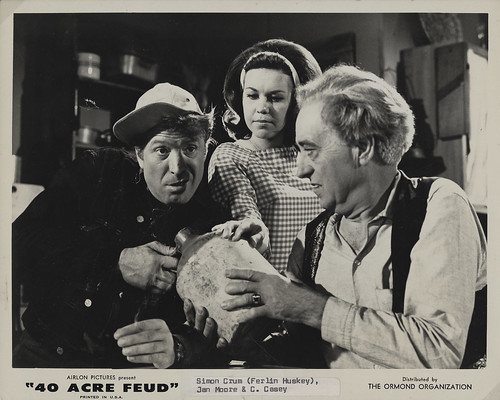
We recently added the Claude Casey digital collection. As of right now, the collection consists of Claude's scrapbooks, just as he made them (but with a little TLC from the University Libraries' Conservation Lab!). The scrapbooks chronicle his life from being a little-known musician in South Carolina, through his performances along the East coast, to many behind-the-scenes photographs from Hollywood movies. Over the next few months, expect to see some very interesting ephemera added to this collection. Researchers of musicians and performances along the East coast and over the radio in the 1930s-1940s will particularly enjoy the newest additions. Our good friends over at the University Libraries' Digital Collections Department are working diligently to add the last few items to the collection, but you can check out their hard work now!

Visit this link to see the Claude Casey digital collection.

Who was Claude Casey?
Before country music achieved mainstream appeal, when the genre was defined as “hillbilly music,” Claude Casey went from a poor boy born in Enoree, South Carolina, on September 13, 1912, to a renowned country musician and film star.  Not only does the Claude Casey collection focus on the celebrated life of a native South Carolinian, but also serves as a time capsule tracing the developments of a musical genre favored by many Americans.
Casey’s musical talents as a singer, guitarist, and songwriter developed while growing up in the Carolinas and Danville, Virginia.  His recording career commenced on July 16, 1937, with the signing of the Claude Casey Trio to the American Record Corporation.  In 1938, Claude Casey and the Pine State Playboys began recording for Bluebird Records while also performing on radio shows at WFTC in Kinston, North Carolina.  By 1941, Casey was performing with the Briarhoppers and Cecil Campbell & the Tennessee Ramblers for WBT in Charlotte. Casey relocated to Augusta, Georgia, in 1951 to work at WGAC, performing with the Sagedusters.  He recorded primarily for record labels RCA Victor and MGM, for whom he did his final recording in 1952 with Chet Atkins.  In 1961, he founded AM radio station WJES (Johnston, Edgefield, and Saluda) and FM station WKSX, both located in Johnston.  In recognition of his contributions to the state, Casey was awarded the South Carolina Folk Heritage Award in 1996.

Billed as the Carolina Hobo, Casey also appeared on numerous television shows and in over 10 motion pictures, including Swing Your Partner (1943), Square Dance Jubilee (1949), Kentucky Jubilee (1951), and Forty Acre Feud (1965 [Uncle Foxey Calhoun]).  He was a member of the Screen Actors Guild and ASCAP.

After a lengthy and very successful career, Claude Casey passed away at the Edgefield County Hospital on June 24, 1999, survived by his wife, Ruth Derrick, whom he married in 1942, and their two children, Leon and Michael.  The Claude Casey collection was donated to the Music Library in 2006 by Ruth Casey and contains many items that afford a significant portrayal of the hardships and accomplishments of a leading figure in early country music.  Highlights include scores and lyrics, movie scripts autographed by the cast (including Minnie Pearl and Ron Ormond), videos, posters, and signed photographs of famous country musicians.  Among the 78s, transcription discs, reel-to-reels, LPs, and audio cassettes are hundreds of demo, commerical, home, and studio recordings.  Letters and official performance contracts reveal intriguing perspectives of the business driving the country music and movie scenes.

Wednesday, July 14, 2010

Call for papers: double issue!

Please find attached a call for papers for a new online music research journal.

The Journal of Music Research Online (JMRO) is a freely accessible, peer-reviewed journal for the publication of scholarly research in music. It has a distinguished international editorial board, broad scope and only publishes research which is of the highest international standard. Its web site is at www.jmro.org.au.


Editors are inviting articles for the Fall and Winter 2010 double issue of Music Reference Services Quarterly, the peer-reviewed journal published by Taylor & Francis. The articles should fall within the scope of music librarianship in any of the following categories:

· administration and management
· bibliographic instruction
· collection development
· digital audio delivery
· electronic resources
· facilities
· music librarianship education
· preservation of music materials
· reference services
· cataloging
· bibliographies involving printed music and audio-visual materials

The submissions are due August 16, 2010. Conference presentations and poster sessions that would be appropriate to expand as  a journal article within the scope of Music Reference Services Quarterly are welcome.  No previously published, simultaneously submitted material will be considered. For additional information and a description of the review process, Music Reference Services Quarterly contributor guidelines may be found at: http://www.informaworld.com/smpp/title~db=all~content=t792306936~tab=submit~mode=paper_submission_instructions

All papers should be emailed to Ana Dubnjakovic (ana@vt.edu) and Michelle Hahn (mhahn@mail.smu.edu).


Monday, July 12, 2010

"A Little Summer Music" Hammered Dulcimer Concert

"A Little Summer Music" Hammered Dulcimer Concert
Tuesday July 13th, 2010


St. Timothy's Episcopal Church in Columbia continues its "A Little Summer Music" summer concert series July 13th with the Humphries/Isley Duo. The concert is free and begins at 12 noon. Stephen Humphries is well-known for his hammered dulcimer performances as well as on drums and percussion. In 2007 he won the National Hammered Dulcimer Championship at the Walnut Valley Festival in Winfield, Kansas. He will pair up with Columbia guitarist and singer/songwriter Jesse Isley, who has performed with artists such as Will Hoge and the Avett Brothers. Box lunches can be reserved and prepaid ($10) by July 9th; call 252-1994.

St. Timothy's Episcopal Church
Columbia, South Carolina

For information (803) 765-1519
Contact: (803 765-1519